
The Expansion of the Russian Empire
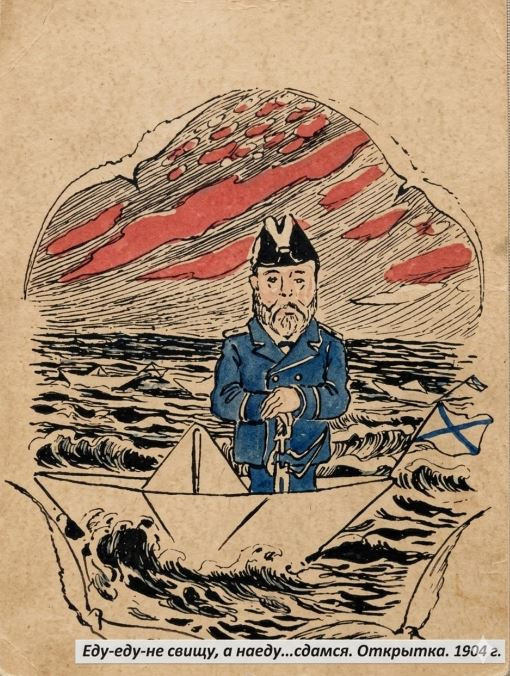
The ancient Persian lands had also captivated the gaze of the Russian Empire for many years. As a result of two separate Russo-Persian wars — first in 1804–1813, then culminating in 1826–1828 — the predatory Russian Empire completely conquered the Caucasus region and defined its colonial borderlines in accordance with the Treaty of Turkmenchay. Thus, after swallowing the large and small khanates and emirates of the ancient Turkic-Muslim world and completing its southern colonization, the insatiable gaze of aggressive Russia shifted toward the Far East.
The Russo-Japanese War was not a surprise attack launched against Japanese imperialism, as Soviet historians have collectively written. Russia prepared for this meticulously for years. First, by putting forward a shared religious brotherhood, it strengthened its solidarity with the European public. Large and small treaties aimed at compromise and integration were signed. Russia intensified its espionage and intelligence efforts, watching every step of Japan, which had multiplied its economic and military might several times over within a short period following the Meiji Reformation to become the most powerful nation in the Far East.
As a result of the Sino-Japanese War of 1894–1895, Japan utterly crushed China and, along with Korea, conquered Manchuria in northeastern China, posing a direct threat to Russia itself, which had always cast a greedy eye on this region.
Looking at the diaries and letters of Emperor Nicholas II, we perceive that he began preparing for war with the Japanese as early as 1900–1901. The relations between the two sides, both searching for a pretext for conflict, grew increasingly strained; first, Japanese troops captured Port Arthur in 1904. They did not stop there; in 1905, they dealt a devastating blow to the Russians near Mukden (modern-day Shenyang in China) and completely shattered the naval fleet of a colossal empire dozens of times larger than itself — Russia — in the naval Battle of Tsushima. The great powers observing the Russo-Japanese War from the sidelines did their utmost to protect their own interests in its outcome, which exerted a massive influence on global geopolitics.
The Treaty of Portsmouth and a New World Order
For the United States and Great Britain, it was undesirable for Russia to gain strength and threaten Europe. Yet they were also deeply intimidated by the aggression of Japan, which had brought Korea and China to their knees in its ambition to rule Asia single-handedly. This ultimately led to the signing of the "Treaty of Portsmouth" on August 25, 1905, through American mediation. As a result, the Liaodong Peninsula, Port Arthur, and the ports of Dalian — which the Russians had leased for many years — as well as the South Manchuria Railway built by Russia and the southern part of Sakhalin passed entirely into Japanese possession. Thus, at the beginning of the 20th century, an Asian tiger like Japan — tough as a hard nut despite its small landmass, achieving immense technical and technological breakthroughs in a short span — advanced to the forefront of world history.
Throughout the 19th century, giant Russia had conquered small states in Central Asia and the Caucasus through bloody massacres, managing to forge a myth about the invincibility of Russian arms. Its sound defeat by tiny Japan triggered the anger and resentment of the Russian peasant who had fanatically believed in this false legend, and gave rise to the "First Russian Revolution" — over-propagandized in Soviet historical science and textbooks.
The entire world looked on in amazement at the achievements of Japan, previously considered a backward, closed country, and began to study its language, ancient culture, and art alongside its economy and military might
The Anatomy of the Meiji Restoration
Among those admirers were the figures of the Alash movement, who had received their education in Moscow, St. Petersburg, and Russia's largest universities and higher education institutions. What kind of reform was the "Meiji Restoration" that elevated the Japanese people to the heights of world civilization? Let us now pause briefly on the history of this event.
The Meiji reform is a phenomenon comprehensively studied by scholars worldwide. The work of Harvard University professor Andrew Gordon, A Modern History of Japan: From Tokugawa Times to the Present, was published four consecutive times in the United States and translated into a number of world languages — recognized in Japan with a prestigious award. The monograph by Yale University professor John Whitney Hall, Japan: From Prehistory to Modern Times, also received high praise from global Japanologists. One could further add the monograph Japan: A Modern History by Professor James L. McClain.
Our goal is not to analyze these works entirely, but to recognize, through the sober conclusions of such prominent scholars, the secret of the Meiji reform that left the Alash figures — along with the global intelligentsia — in utter amazement. Researchers refer to it variously as the "Meiji Restoration," the "Meiji Renewal," and even the "Meiji Revolution."
From 1192 until 1868, Japanese society was ruled by shoguns — representatives of the military aristocracy. If described using a concept closer to our own colonial history, they were akin to a "Governor-General." While the Emperor appointed the Governor-General in Russia, the shogun exercised solitary, independent power within his territory. Due to their continuous disputes over power and land, endless armed conflicts took place in Japanese society, completely disrupting the country's peace.
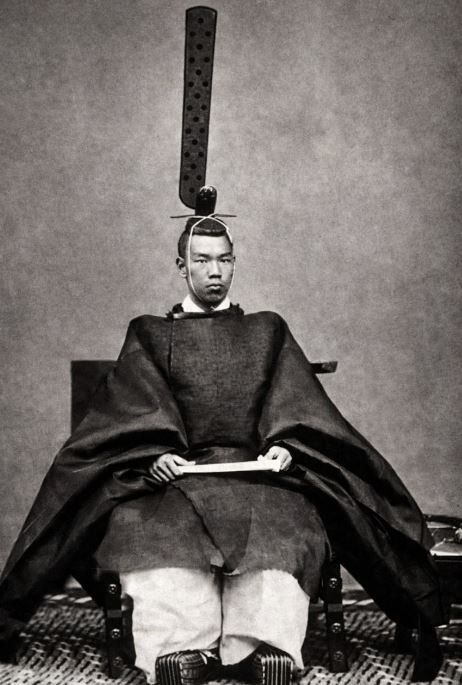
The Meiji reform united the fractured shogunal rule into a single center and established imperial governance. From the day the most influential shogun, Tokugawa, handed over all power to the Emperor of Japan on November 9, 1867, the five-century-long era of samurai rule — and the uninterrupted 265-year rule of the Tokugawa dynasty — came to an end. Emperor Mutsuhito, who so easily subdued the fierce and terrifying samurai and took power into his hands, had just turned 15 years old in 1867. Naturally, such a revolution could not be engineered by a young child alone.
In the 19th century, the industrial revolution expanded in Europe, paving the way for unprecedented technical and technological changes in human history. The world's great powers embarked on a path of renewal. Along with the Japanese intelligentsia, the shoguns — completely exhausted by internal strife — well understood the necessity of modernization. For this, a strong, centrally controlled authority was needed. And the sole way to achieve this was to strengthen the emperorship.
During the shogunate era, the Emperor's influence was negligible. One such weak emperor, Komei, passed away in 1867 at the age of 36. Thus, the heir to the throne, Mutsuhito, came to power on February 3, 1867. At the end of that year, Tokugawa Yoshinobu voluntarily renounced his shogunal title and transferred all power to the Emperor.
On January 4, 1868, Mutsuhito issued a decree concerning the full restoration of imperial power and proclaimed it to the entire world. Armed uprisings were entirely repelled within a year, and in 1869, the "Meiji" era of the 122nd Emperor of Japan began. At this point, it is worth noting that the word "Meiji," meaning "enlightened rule" in Japanese, aligns closely with Yusuf Balasaguni's concept of Kutadgu Bilig ("Blessed Knowledge").
The new Emperor ruled from the ancient capital of Kyoto and changed the name of the old city of Edo — hitherto the stronghold of the shoguns — to "Tokyo," meaning "Eastern Capital." The era of prosperity for today's world-famous Tokyo began with this very change. While preserving national customs and traditions, "Meiji" radically modernized Japanese society. A new government was formed, and a state council chamber called the "Daijokan" was established — resembling the "Khan's Council" in the Kazakh Khanate.
From the very beginning, the Japanese chose the only correct path and divided power into three branches in accordance with the US Constitution: the legislative, the executive, and the judicial. This prevented the concentration of all power in the Emperor's hands, opening the way for new democratic processes. Although the shogunate was abolished, the Emperor in 1871 abolished the 277 shogunal domains and established centrally subordinate prefectures in their place. The "Meiji" reform introduced the ambitious, determined, courageous, and industrious Japanese people to the world from a completely new perspective.
The Three Great Heroes
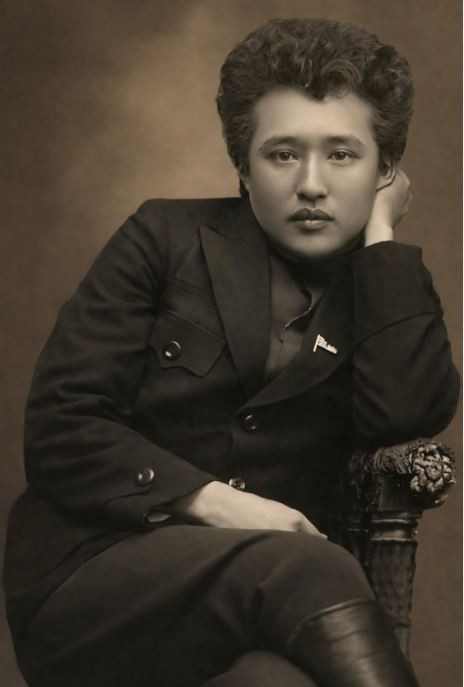
It was clear that the immense changes that shook the old Japanese society could not be implemented by a 15-year-old emperor, no matter how wise. Japanologists credit three prominent figures — referred to with great respect as the "Three Great Heroes" or "Three Noble Citizens" — as the true authors of this marvelous reform.
At the head of this triad stood Kido Takayoshi. He introduced the country's most challenging land reform and the new administrative-territorial management system, serving as the Emperor's advisor for many years. To learn advanced practices, this prominent figure traveled to the United States, Europe, and even Russia to study their achievements, later also serving as Minister of Education.
The name of another hero is Okubo Toshimichi. He implemented Japan's new economic policy and established a western-style financial and monetary system, serving several times as Minister of Finance and Internal Affairs.
As the last of the three nobles, Saigo Takamori rendered immense service to the reformation of the Japanese Armed Forces and served as Minister of War, contributing greatly to raising Japan's prestige and military strength before the world. Remarkably, all three heroes who set the country on the path of European-style modernization hailed from renowned samurai lineages. Their respect for and service to the nation led them to introduce new reforms instead of preserving the old order.
Ito Hirobumi and the Alash Parallel
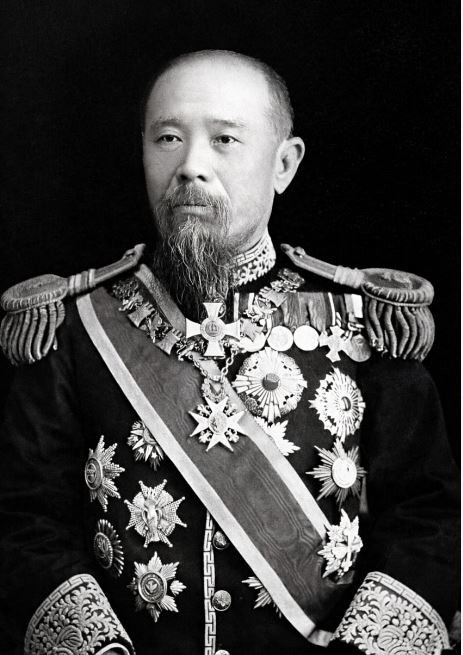
Special mention must also be made of Ito Hirobumi, who made a tremendous contribution to the success of the Meiji reform, serving initially as governor and Minister of Home Affairs, and later as Prime Minister four separate times. Having undertaken an internship in Great Britain during his youth, Ito witnessed the achievements of the industrial revolution firsthand. While in the United States, he established an acquaintance with Alexander Fish, then Secretary of State.
Having seen how far the Western countries had advanced, Ito sent 107 young Japanese citizens eager for knowledge to the United States for training. Later during his premiership, he dispatched Japanese youth to Austria-Hungary and Germany as well. His life principles and political and economic views were highly similar to the ideas and conclusions of Alikhan Bokeikhanov. Although the Alash figures — who could easily surpass the semi-literate Bolshevik leaders — died with their dreams unfulfilled, their rich heritage and the direction they charted were realized during the era of independence.
While writing about the three Japanese heroes, I was reminded of the three leaders who stood at the forefront of the Alash movement — Alikhan Bokeikhanov, Akhmet Baitursynuly, and Mirzhakyp Dulatov. They, too, were not alone. Later, they were joined by the revered figures who had graduated from Russia's most prestigious higher education institutions: Zh. Akbaev, M. Shokay, M. Tynyshbaev, A. Ermekov, Kh. Dosmukhamedov, Zh. Dosmukhamedov, R. Marsekov, and others.
While writing about the three Japanese heroes, I was reminded of the three lions who stood at the forefront of the Alash movement — Bokeikhanov, Baitursynuly, and Dulatov
Young Mukhtar Auezov's Article "Japan"
Thanks to the Meiji reform, Japanese society — which had isolated itself from the entire world and preserved a medieval feudal management system — achieved colossal success in just 30 years. The achievements of Japan, which utterly defeated Russia in battles on land and at sea, gave the Alash figures much food for thought.
Among the first to publicize the wonderful achievements of the Land of the Rising Sun as an example for the Kazakhs was the young man Mukhtar Auezov, whose nascent works were just beginning to see the light of publication at that time. The future classic of national literature published his article titled "Japan" in issues 4 and 5 of the Abai journal, printed in Semey in 1918. This specific article brought so much trouble upon the writer's head that until the end of his life, Mukha did not mention its title even once in any of his writings, speeches, or even in the diaries he kept during his later visit to Japan. The article was not included in the initial 12-volume or the subsequent 20-volume collected works published after Auezov's death.
Only during the years of Perestroika, when censorship loosened under the slogans of "disclosing the truth of blank spots" and "glasnost," did the prominent Abai scholar, Professor M. Myrzakhmetov, discover "Japan" in the Abai journal and publish it for the first time in issue No. 8 of the Madaniyet zhane Turmys (Culture and Life) magazine in 1988.
"In this day and age, for any nation to surpass a state of disorder, lack of science, and obscurity, and to attain an equality that allows it to sit knee-to-knee with the advanced nations, is not a task that happens rapidly."
The writer immediately directs the reader's attention to the fact that achieving equality is no easy matter. Further on, the author expands on the core idea: "Yet, in this era, there are a hundred clauses of conditions that enable an ignorant nation to join the ranks [of the advanced]" — pointing out that these are "deep thought," "unflagging energy," "ambition," and "labor." It is not difficult to perceive that at the source of these words, by a man who had memorized Abai's poems since childhood, lie the "five noble deeds" of the sage: "Ambition, labor, deep thought, contentment, and mercy — keep these in mind."
Beginning the history of Japan from further back, Auezov writes: "In the first half of the 19th century, the trade of China, America, and other European kingdoms was bustling," and adds: "Japan lay on the path where these nations communicated with one another." Furthermore: "Enlightened nations introduced their own trade into Japan as well, turning to suck their blood" — demonstrating how Japan, while officially retaining its independence, had fallen economically into the predatory exploitation of aggressive powers.
Regarding how the land of the samurai fell into such a state, he sharpens his pen against European greed: "It was the greediness of enlightened nations like England, France, and Holland, who wished to exploit Japan's ignorance." The writer, who grew up witnessing the predatory nature of Russian colonialism in the Kazakh steppe, frequently exposed such greediness in his later works.
Auezov closely studied Japanese history and its methods of struggle on the path of national awakening. He notes: "Against a cunning and sharp-fanged enemy, there was no other way but to hold a weapon identical to the one they held, and to rely on an order identical to the one they relied upon" — paying special attention to how the Japanese reformers successfully used the enemy's own weapons against them. He describes how the Japanese people's search for a way out of the deadlock led to the Meiji reform: "The leaders and caretakers of the people understood this situation, sacrificed their lives for this path, and searched to find a new way. Due to their striving, the innovation (restoration) of 1868 came into the world."
In his brief article written during an era of information scarcity, the young Auezov provides an abundance of data regarding Japan's ancient and recent history. He provides concrete statistical data regarding the very high literacy rate of the Japanese people:
"On the path of education, according to the census of 1901, the number of male children of exact school age in Japan who were in school reached 94% (94 out of 100), and the number of female children was 81 percent."
Having thoroughly researched Japanese history, Auezov noted the striving of Japanese youth during the years when Ito led the government: "From the very start of the renewal, the youth of Japan began to flock to the places where the shops of science were established." Their goal upon arriving at each place was "the care for Japan's happiness. For that reason, those among them who acquired European science returned to their land without delay, sowing the knowledge they had gathered into their country."
Prime Minister Ito did not accept the experiences of Great Britain, the United States, Austria-Hungary, and Germany exactly as they were. He began with the premise that ruling the country and establishing new economic relations had to be developed in accordance with national traditions. This process did not escape Mukhtar's attention either:
"Japan did not blindly follow whatever Europe did. They scrutinizingly considered and tested the knowledge that each person brought back, taking only what they deemed favorable and good for themselves."
When the Japanese intellectuals and leaders embarked on the "Meiji" reform, they strictly ensured that during the provision of European-style education to the youth, the national values that distinguished the Japanese people from others were not forgotten. This stance appealed greatly to the young Auezov: "They imposed conditions on the people coming from abroad. Those conditions were: not to let the students absorb things into their hearts that could harm Japan's nationality; if individuals with such traits were noticed, they were not admitted to service."
Language, Literature, and the Place of Women
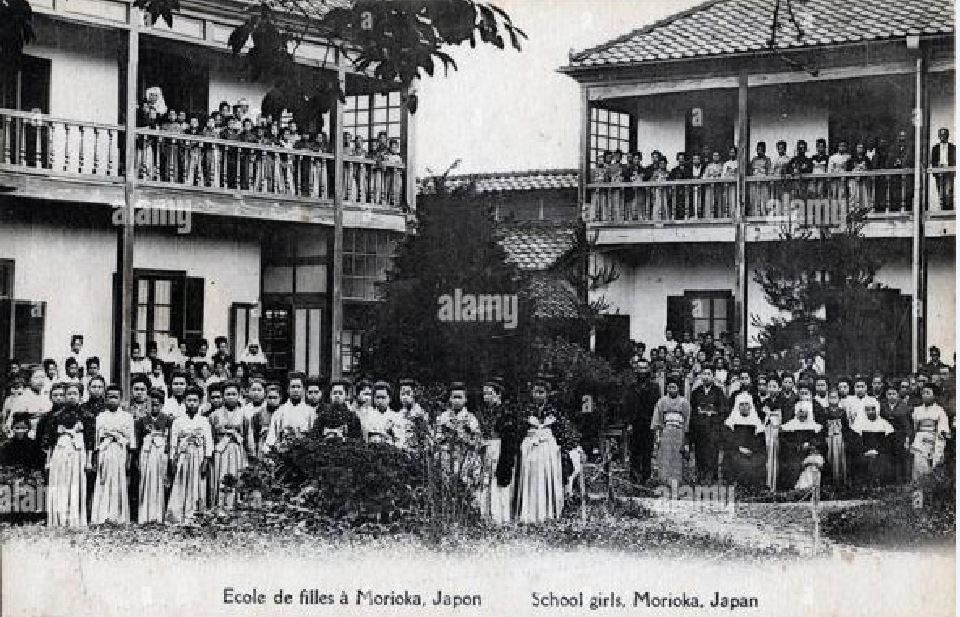
Whenever writing about the destiny of any people, another issue that always troubled Auezov was the fate of the language and the matter of writing. From this perspective, the young writer concludes: "One thing whose difficulty has not departed to this day is that the literatures of China and Japan merged at an early period; due to this merger, the Chinese language invaded all of Japan's written words, overcoming the book language of Japan."
The scientific debate that began 100 years ago concerning the origin history of the Japanese language has not ceased to this day. Specialist linguists categorize the Chinese language into the Sino-Tibetan language family, whereas the nature of the Japanese language is completely different. The Japanese language is agglutinative — a language of suffixes — whereas in Chinese grammar, declension and conjugation do not exist at all.
For that reason, one group of linguist scholars categorizes Japanese into the Altaic language group composed of Turkic-Mongolian and Tungusic-Manchu languages. The renowned linguist Professor E. Tenishev points out that the second group of Altaic languages includes "the Korean and Japanese languages" (Altaic Languages, in Turkic Languages, Moscow, 1996, p. 7). Along with the strengthening of Buddhism's influence in Japan from the 6th century, the impact of Chinese culture intensified, and many words and terms began to enter the Japanese language from Chinese. The ever-inventive Japanese invented a new writing system called katakana and hiragana — precisely how Akhmet Baitursynuly modernized the new Kazakh alphabet on the basis of Arabic graphics.
As acknowledged by Japanese linguist scholars, the share of Chinese-origin words in present-day Japanese constitutes approximately 60 percent. The young Auezov did not overlook the problematic issues of language training in Japanese schools either: "The students must first become acquainted with the Chinese language and also learn the languages of other peoples."
The theme of women was always a central focus for Auezov. In his article about Japan, the place of women in Japanese society caught the writer's pen. He notes the change of the old view toward women in Japanese society: "The current stream of innovation has abandoned that custom, and recognizing the woman as one of the honorable members of the state, is introducing her into the ranks." Lower-level schools and higher education institutions were opened specifically for girls. Summarizing his observations regarding the education of girls in the Japanese school, he presents the innovation as an example:
"The girls both increase their knowledge by learning science, and gain necessary experience for life in terms of household management. This is a unique form found by Japan after seeing the mistakes of other nations."
The young Auezov did not aim to solely praise the lifestyle of the Japanese people. He does not overlook that the Japanese pursued the Buddhist religion and the Confucian teaching simultaneously, being "a people who have been adhering to several religions," and that this was "something that posed an obstacle to placing the Japanese on par with the European peoples." He also noted another alien behavior in Japanese society: "When marrying a woman, taking the daughter of a close ancestor of the same lineage as oneself" — arising from the false concept that "the blood changes if one takes the daughter of another ancestor."
The Press, Science, and the Unfinished Article
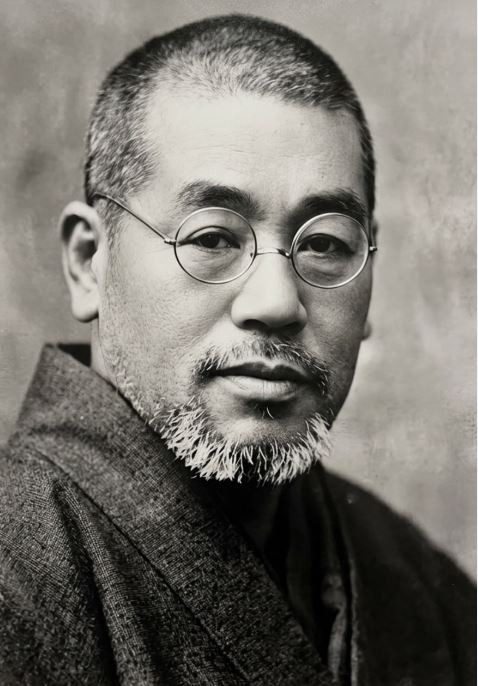
In the article, which bears an encyclopedic character concerning Japan's ancient and recent history, room is also granted to literature and press. Turning toward writing, the young Auezov expresses dissatisfaction regarding the current state of Japanese literature: "Compared to the advancement of other aspects, the thing that was left clumsily behind is the literature of Japan."
At the time the article was published, Japanese society, rich in retreats and secrets, was only just becoming known to the Western public. Data regarding its extremely rich literature had not yet reached the scientific public. Japanese written literature traces its origin back to the sacred books Kojiki and Nihon Shoki of the 7th–8th centuries. The classical literature in various genres was created during the Heian period in the years 764–1185, during which a writer like Murasaki Shikibu had already managed to bring into the world the complex philosophical-psychological prose titled The Tale of Genji.
The masterpieces of the haiku genre like Matsuo Basho, Yosa Buson, and Issa Kobayashi, the belles-lettres of Ihara Saikaku's Five Women Who Loved Love, and the dramaturgy of Takeda Izumo were created during the prosperous Edo era. During the Meiji reform, European traditions and genres rapidly entered Japanese literature. Among the resulting modernist novels, one can name Natsume Soseki's Kokoro, Tokutomi Roka's Kuroshio, and Tokutomi Soho's Hototogisu.
Auezov writes about the press: "The time when regular newspapers began to be published in Japan is around the 1870s." This turns out to be the Yokohama Mainichi Shimbun, which began publication from 1871. He notes that the press of a country whose writing began early had existed previously — newspaper leaflets called kawaraban appeared in Japan as early as the 17th century, with the first issue from 1615 still preserved to this day.
Auezov brings forward concrete data showing that the number of the Japanese press increased sharply after the reform: "In the year 1899, the number of newspapers and journals being published was 978." The author also shares news that Japanese science had reached a new frontier, noting that Japanese scientists surpassed the Europeans in seismology: "In the science of 'seismology' which studies the variations of earthquakes, those who studied in Europe are considered less proficient than the experts of Japan."
Without deepening his opinion on the development of Japanese science too much, Auezov concludes briefly: "Besides this, there are those who labor to introduce a new form into various sciences, gaining a great reputation." This is the final sentence in the article. The abrupt interruption upon reaching the part concerning the state of Japanese science indicates that it was left incomplete. Published in two consecutive issues of the journal and deeply pondered, this article gave much food for thought to the educated citizens of Kazakh society who were eager for innovation.
Japan's Victory and the Echo in the Kazakh Steppe
When it came to sharpening the pen on the Japanese theme, Mukha was not alone. The Kazakh intelligentsia joyfully received the colossal successes of tiny Japan, which chopped off at the roots the regular ambitious project of giant Russia — "Zheltorossiya" ("Yellow Russia") — which had conquered not only Kazakhstan but the entirety of Central Asia and the Caucasus region.
At the end of the nineteenth century, when the Qing Empire began to weaken, Russia, in accordance with the Sino-Russian Convention of 1898, first leased the Kwantung District — the strategically advantageous part of Manchuria protruding into the sea — for 25 years. Turning the port of Port Arthur into a stone fortress, it built the Trans-Siberian Railway and the Chinese Eastern Railway in 1897–1903. Without stopping there, it laid the South Manchuria steel road connecting Harbin and Port Arthur, exceeding 1,000 kilometers in length. Instead of developing its own backward regions, Russia greedily poured billions of funds into China, establishing itself there permanently.
During the Russo-Japanese War, the Japanese dealt a stunning defeat to the overconfident Russians simultaneously at sea and on land. Along with Port Arthur, the Kwantung District, the South Manchuria Railway, and the Liaodong Peninsula, the boasting Russian Empire also lost southern Sakhalin, suffering an utter disgrace before the world. The Russian press mercilessly criticized the weak-willed Emperor Nicholas and his loose policy. The clear-eyed Kazakh intellectuals were not merely observing all of this; on the pages of the Qazaq newspaper, led by the teacher of the nation Akhmet Baitursynuly and distributed entirely across the Kazakh steppe, the Japanese victories were actively popularized.
Akhmet Baitursynuly: Asian Solidarity
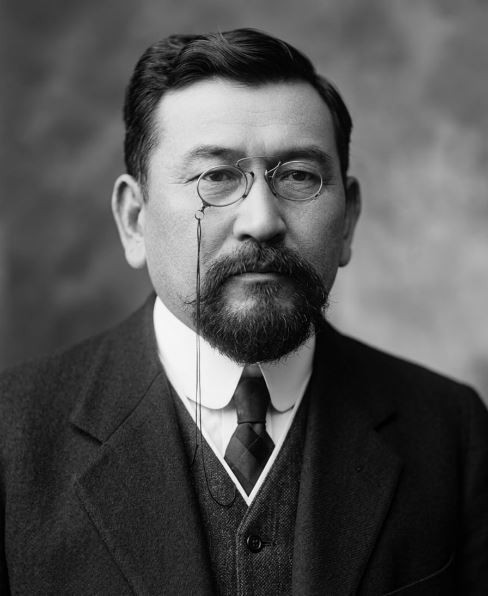
Although Akhmet Baitursynuly did not write a specific work about Japan, he stands at the forefront of those who sharpened their pens on this topic. In his article titled "Concerning Foreign Tsars," published in the March 9, 1913 issue of Qazaq, he expressed his gratification for the fierce people:
"The strongest among the Tsars of Asia turns out to be Japan. What kind of nation Japan is was seen when it fought with Russia. There is probably no Kazakh who does not know that."
— Baitursynov A., Works, Almaty, 2023, Vol. 20, p. 226Akhan popularized the successes of Japan from the perspective of "Asian solidarity." Following the victory of the Japanese over Russia, he writes: "Fear began to enter the hearts of the European peoples." He further reveals the simplistic opinion formed by Europeans of that era: "The meaning of this fear is this: seeing Japan awaken and strengthen, other peoples in Asia will awaken. If Asia awakens... joining its strength, it will descend upon Europe collectively." To prevent this: "There exist opinions among the enlightened of Europe that it is necessary to introduce discord among those who have awakened, dispersing them, causing them to diminish, and disrupting their peace."
In reality, this way of thinking arose from the arrogant opinion that Asians were a "semi-savage people" standing at a lower stage of development. Although they knew that the majority of Asia's peoples possessed completely separate languages, entirely different lifestyles, diverse religions, and varying levels of development, they looked upon all of them with a detached haughtiness.
The Japanese themselves evaluated the Korean people, who were close to them in terms of origin, as a people with lower cultural development. Regarding the Chinese, with whom they shared the origin of writing, they viewed them as a backward people who could not keep up with the innovation of the times.
No matter what topic A. Baitursynov sharpened his pen upon, he placed the care of the Kazakhs higher than everything. In his article "What is Necessary for the Kazakh," he brings to the forefront the issue that the Kazakhs must demand what is necessary for themselves from the Russian authorities: "The Japanese war turned out unfavorably for Russia, matters turned for the worse, and things inside that resembled a blind wound pierced through and came outside in 1905." Akhan divided the urgent Kazakh issues into four groups: religious affairs, the educational commission, the issue of rights, and the agricultural commission. The authors of the Qazaq newspaper frequently presented the successes of the energetic Japanese people to the Kazakhs as an example.
Alikhan Bokeikhanov: Japan and China
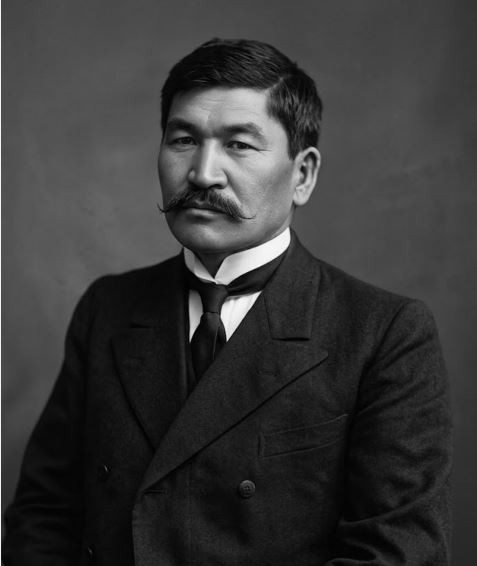
The leader of Alash, Alikhan Bokeikhanov, was also not left out of the Japanese theme. In his article titled "The Kazakhs," written in 1910, he writes that news about the Japanese utterly defeating the Russians spread widely across the Kazakh steppe: "Telegrams were constantly delivering news concerning the continuous victories of the Japanese." Thanks to this, the steppe's long-eared rumor blew concerning how the Japanese were "related" and even "of the same religion" as the Kazakhs. He writes: "All of this awoke their interest toward the war. Newspapers in Russian began to reach the Kazakh steppe in great numbers, let alone those in the Tatar language" (Bokeikhan, A., Almaty, 2016, Works, Vol. 8, p. 52).
In his article titled "Japan and China," published in Qazaq under his pseudonym "Qyr Balasy" ("Child of the Steppe"), Bokeikhanov expounded that as a result of the Russo-Japanese War, "northern Manchuria, which was previously under the Russian hand," had now passed into the jurisdiction of the Japanese, and "a path of freedom was opened for Japanese trade." Bokeikhanov focuses closely on the economic efficiency of Japan's subjugation of China: "Japan intends to rule China, to utilize it. Japan keeps an advising person in China's institutions of money, railway, and the ministry of education."
In 1915, when the article was published, Alikhan Bokeikhanov — thoroughly hardened in the political struggle and elevated to the status of a deputy to the State Duma — openly demonstrates Japan's ultimate goal:
"If this goal of Japan is fully realized, China will become a province of the Japanese kingdom." Further: "This undertaking of Japan must be a matter of haste and excess."
— Bokeikhan, A., Works, Almaty, 2016, Vol. 8, pp. 460–461Subsequent history proved the correctness of the opinion of the sagacious Kazakh politician.
Halel Dosmukhamedov: "To Become a Second Japan"
Halel Dosmukhamedov, who knew several languages and left behind a rich heritage, was also interested in the colossal successes of the industrious country since his student days. While studying at the Imperial Military Medical Academy, Kh. Dosmukhamedov was constantly under the surveillance of the gendarmerie for his participation in the political struggle. In a letter written on October 7, 1904, to Gubaidolla Berdiev, a student at the Kazan Veterinary Institute — preserved in the Military-Historical Archive of Moscow — he points out:
"When you think that besides you, dozens or even hundreds of Kirghiz (Kazakhs) are receiving higher education, you come to all sorts of conclusions that this people too is capable of labor, of progress, that it too, perhaps someday, will occupy one of the honorable places in world domination, that it too can become a second Japan."
Expressing immense concern for the future of his people under Russian colonization, the young Halel sharply criticized the unbridled, predatory, and violent actions of the ignorant peasants who came to "spread culture" toward the Kazakhs, Tatars, Bashkirs, and Kalmyks.
Part VRaiymzhan Marsekov: Actual Connections with Japan
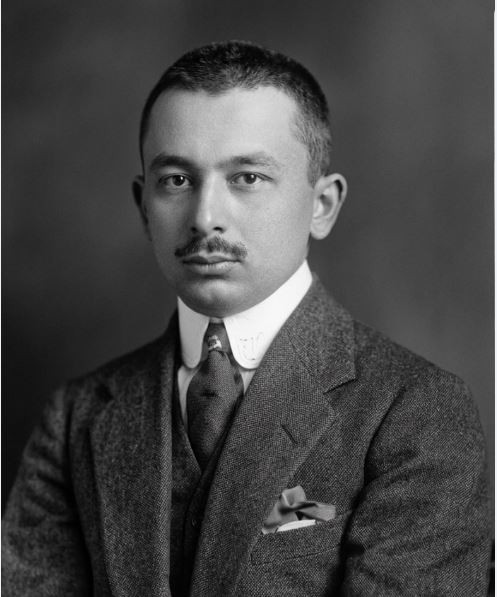
Among the Alash figures, only Raiymzhan Marsekov went beyond deeply researching the successes of the Japanese in reforming their political system and economy, later going so far as to establish actual connections with them. Marsekov belongs to the representatives of the older generation of Alash figures. Initially, when he studied at the law faculty of St. Petersburg University alongside Zhakyp Akbaev — one of the first lawyers to emerge from among the Kazakhs — he participated in the political uprisings of students against the Tsar and was expelled. Raiymzhan, who would not turn back from the path he had taken, continued his studies at the law faculty of Kazan University. After the campaign to punish students concluded, he transferred back to St. Petersburg University, successfully graduating in 1902 and returning to his land. Performing the services of a sworn attorney, investigator, and advocate, he stood at the forefront of the Alash movement.
Having been kindred in spirit and like-minded with future Alash figures like Zhakyp Akbaev, Aidarkhan Turlybaev, Alikhan Bokeikhanov, and Mukhamedzhan Tynyshbaev since his student days, Raiymzhan later advanced to the front line of the political struggle, being elected as a member of the Alash Orda government.
In the years 1917–1919, R. Marsekov took turns as the chief editor of the Saryarqa newspaper, printed in the city of Semey. He published informative, propagandistic, and problematic articles in Kazakh and Russian concerning the improvement of Kazakh society in the publications Dala Walayatynyng Gazeti, Kirgizskaya Stepnaya Gazeta, Aikap, Qazaq, Saryarqa, and Alash, as well as in Svobodnaya Rech, the central organ of the Cadet party — calling his native people to the struggle on the path of freedom and equality.
The Japanese theme is discussed in the articles from R. Marsekov's pen titled "The Kingdom," "The Law Between Kingdoms," and "The Harm of the Bolsheviks — The Movement in Foreign States." In "The Law Between Kingdoms," published in Qazaq, the author writes:
"When Russia and Japan were about to fight, after the ambassadors of both sides departed saying that our relations are severed and therefore we have returned to our country, 6 hours later the Japanese launched the war; at night, arriving at the vessels of Russia standing in the strait of the city of Port Arthur, they began to drop mines."
— Qazaq, 1914, No. 63In the questionnaire filled out by R. Marsekov's own hand, it is demonstrated that in 1917, he was the chairman of the Semey Regional Kazakh Committee, and in 1918, the chairman of the regional land administration (Zemuprav). This institution had both a firm structure and solid authority — within its composition worked financial-budgetary, public education, valuation, auditing, and bank commissions, the district court, the land bank, and the accounting-loan committee. Alongside well-known Alash figures like Alimkhan Ermekov, Halel Gabbasov, Mustakhym Maldybaev, Turagul Ibragimov (Abai'ly), and Aniyar Moldabaev, there were also citizens of Russian nationality: N. Kern, K. Lyashkevich, and P. Lode.
In the archive of the Center for Documentation of Contemporary History of the East Kazakhstan Region, a treaty concluded on January 18, 1919, in Vladivostok between the Semey Regional Zemstvo Administration and the Alash Kazakh Credit Partnership, and the American firm "Anderson, Meyer & Co." is preserved. Hans Christian Anderson from the American firm, Ivan Kapitonovich Lebedev, and Raiymzhan Marsekov concluded an extensive treaty consisting of 26 points concerning the delivery of various goods to the value of fifteen million rubles. This treaty proves that the Alash figures, even during an era of turmoil, succeeded in reaching an international level and established business connections with the directors of a world-renowned company.
The Secret Mission to Vladivostok and the Hidden Archives
The well-known Alash scholar, Sultankhan Akkulyuly, writes that Raiymzhan Marsekov departed on a journey to the Far East in December 1918 upon a secret assignment from Alikhan Bokeikhanov to conduct negotiations with the leadership of the government of Japan. The scholar also notes that the head of the Alash Orda government, A. Bokeikhanov, had previously sent A. Baitursynuly and M. Dulatov to Eastern Turkestan at the beginning of 1918, assigning them to establish contact with the Consulate General of Japan.
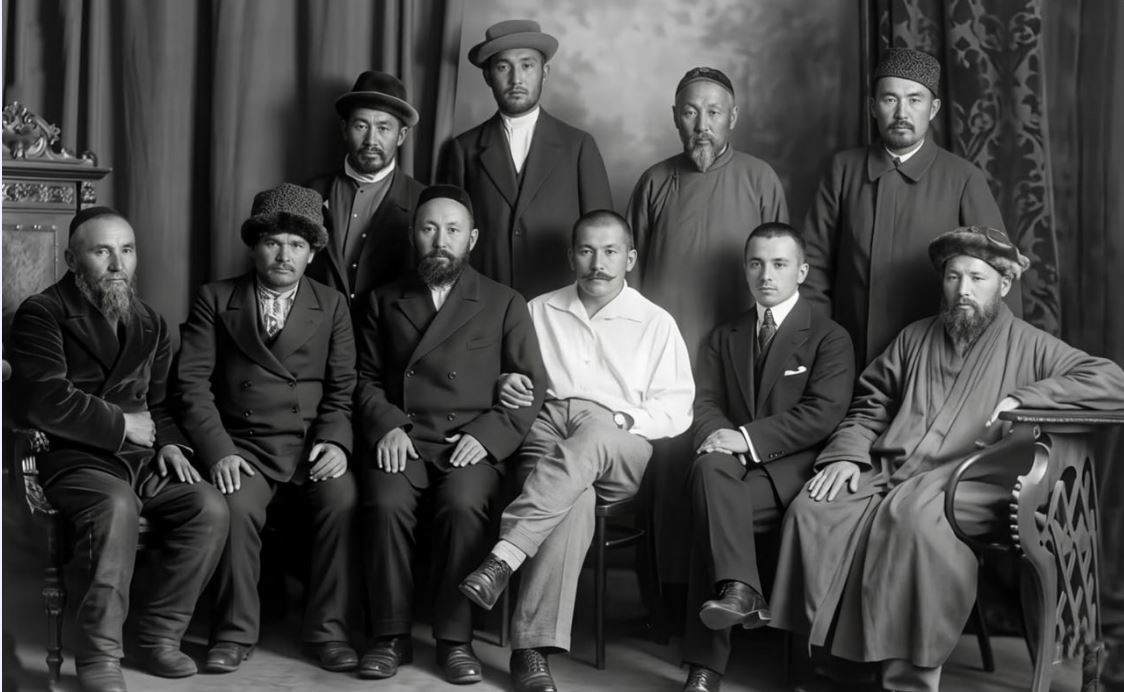
Alash scholars have written extensively concerning the journey made by the Alash figures to Chuguchak and the photograph taken there alongside the Kazakh intellectuals; however, concrete data showing that they met with the representatives of the Japanese consulate does not exist.
S. Akkulyuly notes that during his journey to Vladivostok, R. Marsekov visited the Consulate General of Japan, where he conducted negotiations with Vice-Consul Rizo Watanabe. It was during this very meeting that he handed over the letter addressed to the Japanese government on behalf of the Alash Autonomy.
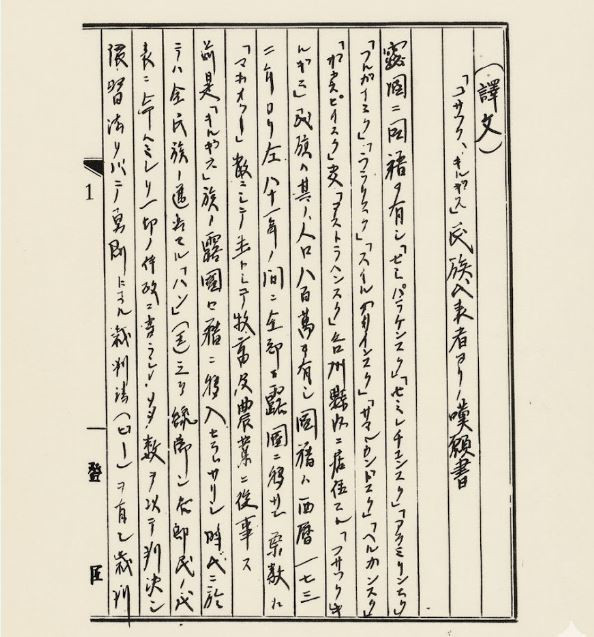
The full content of this letter, which was frequently mentioned in the interrogation materials of the Alash figures who were later subjected to repression, remained somewhat unknown to us for many years. In recent years, a Japanese scholar, Hokkaido University professor Tomohiko Uyama, discovered the Japanese translation of the letter addressed by R. Marsekov to the Japanese government (the original was not found) in the Foreign Ministry Archive of Japan, bringing to light an exceptionally important document relating to the international connections of the Alash Autonomy.
The document consists of 9 pages. Raiymzhan Marsekov began the letter (the Japanese translated this as a "petition") with information concerning the Kazakh people and the history of their colonization by Russia, moving on to how they proclaimed the Alash Autonomy after the October Revolution and formed the Alash Orda government. He also shared news that they were conducting a struggle against the Bolsheviks jointly with young states of that time, such as the Turkestan Republic and the Bashkir Autonomy. Bringing to the forefront that a scarcity of arms, medicines, and provisions prevailed in the Alash troops, he requests that assistance be granted to the Kazakhs.
The Alash Program and the Question of Sovereignty
In the scientific literature written on the Alash theme to this day, a simplistic thesis prevails that the Alash statehood was established as an autonomy within the jurisdiction of Russia. We proved and demonstrated that this was politically groundless and scientifically unsubstantiated 26 years ago in our work titled The Alash Program: The Injustice and the Truth (published in 2000).
The Alash program was published in the Qazaq newspaper in November 1917. Having assessed the balance of power among the political forces and parties disputing over authority in the empire, the Alash scholars who compiled the program assumed that it would become a democratic country of a federal type. This is clearly perceived from the very first sentence in Chapter 1, titled "The Form of the State": "Russia is to be a democratic, federative republic."
Two months after the Alash program was published, namely on January 16, 1918, the III All-Russian Congress of Soviets adopted the "Declaration of Rights of the Working and Exploited People." Its compilers, utilizing the conclusions in the Alash program, wrote: "The Soviet Russian Republic is established on the basis of a free union of free nations, as a federation of Soviet national republics."
Regrettably, in the collection titled Alash-Orda: Collection of Documents, compiled by a certain N. Martynenko in 1929, the Alash program was deliberately distorted in translation to suit the interests of Soviet policy. The vast majority of subsequent research in Russian and foreign languages proceeded with precisely this negative translation as a guide. For example, the Society for Central Asian Research (Oxford) published Programmatic Documents of Muslim Political Parties of 1917–1920 in 1985, copying the program from S. Dimanstein's book The Revolution and the National Question — which in turn took the text from the identical malicious translation by Martynenko.
To further clarify the meaning of the initial sentence, the original program gave a definition inside parentheses that was as clear as a stamp on ice:
"The meaning of democracy is that the people rule the state. The meaning of federation is the union of equal (qurdas) states. In a federative republic, the foundation of each state is separate, and their solidarity is one. Each carries its own reins itself."
Let us perform a legal analysis of this original definition and its Russian translation. The sentence "The meaning of federation is the union of equal states" ought to have been translated as "Znachenie federatsii — obedinenie ravnykh gosudarstv." The Bolshevik translators deliberately distorted its meaning, demonstrating it as "Federatsiya — soyuz melkikh gosudarstv" ("Federation — a union of small states"). The Kazakh word qurdas has no other meaning in this context than "equal" (ravny), whereas melky yields the concept of "small" (usaq).
The compilers of the Alash program aimed to establish an independent state whose window was equal to Russia — with both reins and the lead entirely in its own hands
The Alash figures, who had graduated from the most foundational universities of St. Petersburg and Moscow — the majority of whom consisted of professional lawyers — deeply knew that various forms of the concept of "federation" existed. At the root of their thesis that "the foundation of each state is separate" lay the concept of a confederation, which is considered a union of independent states. Today's model of a confederation is the current European Union, where "each carries its own reins itself." Without deepening further, the compilers aimed to establish the Alash Autonomy not as a state formation dependent on Russia or completely subordinate to it, but as an independent state equal to it — with both reins entirely in its own hands.
We understand that in the letter R. Marsekov addressed to the Japanese Government, he demonstrated Alash Orda as a sovereign state established on the territory of the former Russian Empire after the Provisional Government collapsed.
Japan's Choice: Admiral Kolchak
The Japanese side constantly delayed the answer to the letter that arrived on behalf of the Alash government. Two different reasons appear to have existed for this.
First, Japan did not aim for its ancient enemy, Russia, to regain its strength. For that reason, it encouraged the armed struggle against the Bolsheviks, who had begun to gather political power into their hands, wishing for the fire of the Civil War to engulf the entirety of Russia. The Japanese pinned their choice upon Admiral Kolchak, who had conquered not only the Far East but also Siberia, and had even crossed past the Urals to reach Simbirsk (later Ulyanovsk), granting him immense support.
While Soviet history depicted Kolchak's biography in the blackest terms possible, today's Russian historians are fond of evaluating him highly as a patriot of his country. Although they know that Kolchak visited England, the United States, and Japan, compromising with the leaders and military generals of these countries, they do not demonstrate much willingness to write about it.
During his journey to the United States, Kolchak met with President W. Wilson on October 16, 1917. When he arrived in Yokohama from the United States on the Japanese steamer Karyo-Maru, he heard the news that the Bolsheviks had overthrown the Provisional Government. In the summer of 1918, Kolchak met with the Chief of the General Staff of the Japanese Armed Forces, General Uehara Yusaku, the Chief of the Intelligence Department of the General Staff, Nakajima Masatake, and a lieutenant colonel of the Japanese intelligence service, Tanaka, establishing close contact with them.
Japanese military historians cite data showing that through the commander of the Separate Manchurian Detachment, Ataman Semyonov, they granted to Kolchak — who had proclaimed himself the Supreme Ruler and Supreme Commander-in-Chief of Russia — 2 million cartridges, 30 cannons, 50 thousand shells, 20 thousand rifles and 40 million cartridges for them, 100 machine guns, and 2 million bullets. In August 1918, when Kolchak's army launched an attack on Chita, a corps of Japanese troops also participated in it. When the admiral began his victorious campaign from Siberia toward Central Russia, the Japanese troops seized the Amur Railway, completely liberating it from the Reds in September 1918.
Thus, having opened the way for Kolchak's campaigns against the Bolsheviks and granted immense assistance to him both with military strength and technique, the government of Japan was in no hurry to grant assistance to the Alash Autonomy, which they did not know closely. For the Japanese, who look upon any matter with extreme caution and make decisions without haste, both R. Marsekov himself, who signed the letter, and his authority appear to have triggered doubts.
In general, internal power had not fallen into a concrete division within the Alash Orda government. For that reason, in the documents written on behalf of the autonomy and the government, the signatures of A. Ermekov, M. Tynyshbaev, Kh. Dosmukhamedov, and R. Marsekov — who performed the service of an informal vice-premier on behalf of Alash — are frequently encountered. After the answer from the Japanese side was delayed, R. Marsekov was compelled to depart from Vladivostok. Even so, the Alash leaders led by Alikhan Bokeikhanov did not sever their hope from the answer to come from Japan.
The vast majority of negotiations between Alash and various Siberian formations were conducted by Alimkhan Ermekov, who had studied in Tomsk — considered the informal capital of Siberia — and was closely associated with its intelligentsia. Alikhan Bokeikhanov, through high-ranking Japanese officers within the composition of Kolchak's army, inquired about the answer to the letter dispatched by Alash Orda to their government. The Japanese, who at this time had intensified their support for Kolchak's army, did not grant a satisfactory answer to the Kazakhs this time either.
When the Alash Autonomy was dissolved, the Soviet side demonstrated leniency toward the Alash Orda members, offering them responsible service. The elder of Alash, A. Baitursynuly, participated in the establishment of the Kazakh ASSR along the model of the Alash Autonomy as a member of the Kirrevkom in 1919, and became the People's Commissar of Education of the Kazakh Republic in 1920.
The Journey to Chuguchak
In the summer of 1918, Akhmet Baitursynuly, along with Mirzhakyp Dulatov, Sadyk Amanzholov, and Raiymzhan Marsekov, crossed the border and arrived in the city of Chuguchak. Staying at the house of the famous Tatar merchant Ramazan Shanyshev, they provided information to the wealthy Kazakhs and representatives of the local intelligentsia concerning the state of the Alash Autonomy and the Alash army, calling on them to grant assistance in forming the army. There exists information stating that during this journey, the Alash figures met with the representative of the Japanese consulate in Chuguchak, proposing that they demonstrate support for the newly established Alash Autonomy; however, this still requires further substantiation with concrete archival documents.
The Alash figures took a photograph during this journey. A local photographer nicknamed "Portraitist Mukhamedzhan" photographed them. Mukhamedzhan's daughter, Madame Nikara, married Colonel Balkash Bafin, one of the leaders of the liberation struggle of the Eastern Turkestan Kazakhs. Our sister Nikara Mukhamedzhanova preserved that photograph like the apple of her eye, publishing it in the newspaper Qazaq Adebiety during the initial years of the country's independence. This photograph, in which alongside the Alash figures, the intelligentsia of Chuguchak and the inspired Kazakh poet Aset Naimanbaev are depicted, entered the national chronicle as a visual history of Alash.
According to another source, following the path indicated by the Alash figures, the Eastern Turkestan Kazakhs subsequently reached out to the Japanese consulate independently, requesting that they be taken under guardianship. To this, they reportedly answered: "The Kazakhs must en masse acquire Japanese citizenship, only then can we take you under our wing." The Xinjiang Kazakhs, who had witnessed much tribulation from the colonial policy of two giant empires — Russia and China — did not wish to become dependent on a third country.
Part VIThe Tragedy of Persecution and the Legacy of the Heroes
A. Baitursynuly's journey to Chuguchak, A. Ermekov's meetings with Japanese officers in Siberia, and R. Marsekov's meeting with the Vice-Consul of Japan in Vladivostok to hand over a petition-letter on behalf of the Alash Autonomy served during the years of Stalinist repressions as a pretext for the political campaign of punishment titled "the struggle against Japanese spies," and many innocent Alash figures were executed. This is a very extensive topic. Nevertheless, we deemed it proper to briefly review the aspects of the destiny of the Alash figures relating to the Japanese theme.
In absolute truth, among the Alash figures, the sole person who met face-to-face with a representative of the Japanese government and handed over a letter signed by himself on behalf of Alash Orda was Raiymzhan Marsekov. We consider it possible that Alikhan Bokeikhanov and Alimkhan Ermekov met with certain representatives of Japan within Kolchak's army and in various temporary formations in Siberia; however, it is exceptionally difficult to state precisely at what time and with which exact persons this occurred.
During the journey of the Alash figures led by Akhmet Baitursynuly to Chuguchak, the goal of obtaining assistance from the powerful, wealthy Kazakh bays in Xinjiang for the young Alash Autonomy was more central than requesting support from the Japanese government.
The Kazakh intellectuals who received their education from Russia's largest universities were thoroughly informed regarding the Japanese militarism and aggression that was increasingly gaining strength. Japan first began to press its knee against the neighboring Korean people. After turning the entirety of Korea toward itself, it struck at China, subsequently establishing the puppet state of Manchukuo entirely subordinate to Japan. Seeing, knowing, and reading all of this in the daily press, the Kazakh intellectuals knew that if Japan were to take the Alash Autonomy under its protection, they themselves would ultimately wear the shroud of the peoples whom they were writing about as "miserable Koreans" and "wretched Chinese." Yet, during that period, split into whites and reds and experiencing a bloodbath, the Kazakh land was in exceptional need of assistance of any kind.
Therefore, not only the Kazakhs, but leaders of the Bashkir and Tatar peoples like Zaki Validi and Sadri Maksudi strove to establish connections with Japan, Turkey, and also with England, which strove to preserve its influence in Central Asia.
All of this was a trend against colonialism of any sort, emerging from the thought for the future of an oppressed country and the interest of a crushed nation. It is in this manner that the actions of the Alash figures led by Raiymzhan Marsekov ought to be understood
The older generation of Alash figures like A. Bokeikhanov, A. Baitursynuly, M. Dulatov, and Zh. Akbaev were under constant surveillance by the gendarmerie even during the Tsarist era. R. Marsekov, who prior to the revolution had achieved a position like sworn attorney of the district court in the Russian Empire, was also under the continuous surveillance of the gendarmerie.
In one of the two denunciations filed against R. Marsekov in 1914, preserved in the Archive of the President of the Republic of Kazakhstan, it was reported that he conducted agitation to gather funds in the amount of 2,000 rubles for the purpose of publishing an all-Kazakh newspaper. In the second denunciation, it was written:
"In view of the intelligence information received by the administration that a group of intelligent Kirghiz (Kazakhs), at the head of which stands the sworn attorney Raimzhan Marsekov, intend to publish a newspaper of a progressive direction in Semipalatinsk in the Kirghiz (Kazakh) language, I propose to verify how accurate the above-listed information is."
— Archive of the President of the RK, Fund 32, Inventory 2, Case 4893, Vol. 1, p. 235The surveillance of Raiymzhan continued during the Soviet era as well. In a denunciation dated February 20, 1922, in the aforementioned archive, the agitation-propaganda conducted by Zh. Akbaev, A. Bokeikhanov, and R. Marsekov to attract influential bays in the Karkaraly region to their ranks was narrated.
The famine of 1921 hit our people exceptionally hard. Mukhtar Auezov delivered a report titled "The Kazakh Republic Will Be Left Without Kazakhs" at a meeting of the regional party committee and the Kaz Central Executive Committee on December 10, 1921, calling for a helping hand to be extended to his people who had fallen into disaster. The Bolshevik authorities identified R. Marsekov as the organizer of the mass migration toward the Chinese side, taking a written explanation from him on March 25, 1922. In his explanation, written at a time when Soviet government had declared an amnesty for the Alash figures, R. Marsekov wrote many matters openly and clearly. Concerning how the Alash Orda government assigned him to organize the Alash army, R. Marsekov writes completely openly:
"The creation of Kirghiz units and their organization (from various Russian military units) with the specified military purpose — the realization of their national tasks — was entrusted to me by the Semipalatinsk Regional Council of Alash-Orda."
In his explanation, he speaks regarding the two years he spent on the other side of the border: "I suffered in a foreign land, not knowing the true state of affairs and the policy of the Soviet government, which protects the rights of infringed peoples."
In reality, although R. Marsekov's family were in a Kazakh village on the other side of the border, he himself frequently came to Semey and Ust-Kamenogorsk, participating in diverse Alash events. This can be clearly seen from other denunciations filed by NKVD agents at that time. Even though R. Marsekov had crossed over to China, the GPU agents did not cease their surveillance of him. The Semey GPU made a note on September 6, 1923, concerning how he had crossed from Chuguchak into Kazakhstan, reaching as far as the village of Sozak in the Shymkent district. Four separate denunciations were written against him in 1924. The Semey OGPU, around January–February 1925, intercepted a letter from Raiymzhan Marsekov demonstrating that he was performing service in the American trade representation in Chuguchak under the leadership of a certain Khilovsky, planning to depart for England after gathering funds.
R. Marsekov's fate on Chinese soil became known to us solely through his close relatives and descendants. We know only that he was shot in a Chinese prison in 1938 upon an assignment from the NKVD. During these times, the Xinjiang region was ruled by the blood-stained leader Sheng Shicai, who felt Xinjiang to be like the sixteenth republic of the Soviet Union, had passed into the membership of the VKP(b), entered into the confidence of Stalin, and received military and economic assistance from him in colossal volumes.